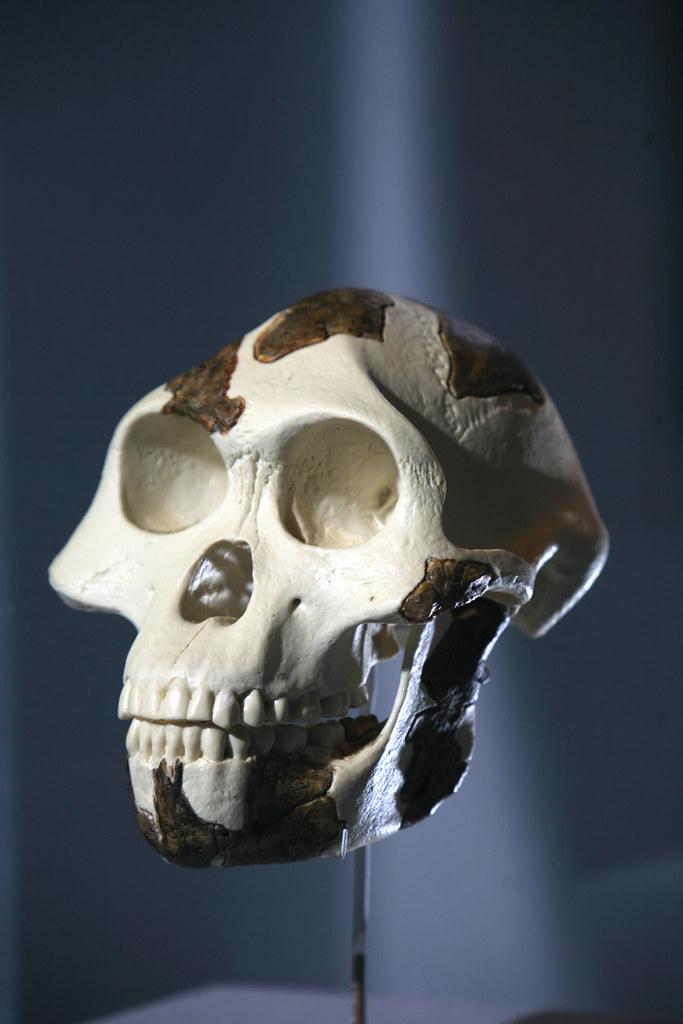
The Australopithecus jaw discovery offers a fascinating look into our evolutionary past. This ancient find sheds light on the traits we still share with humans today.
What is Australopithecus?
Australopithecus refers to a genus of extinct hominins that lived in Africa between approximately 4 and 2 million years ago. This group is significant in the study of human evolution due to its key role in the lineage that eventually led to modern humans. The most famous species within this genus, Australopithecus afarensis, is best known through the fossilized remains of “Lucy,” one of the earliest and most complete hominid skeletons discovered.
Australopithecus species were bipedal, meaning they walked on two legs, but they also retained adaptations for climbing, indicating a partially arboreal lifestyle. Their small brain size, comparable to that of modern chimpanzees, contrasts with their upright posture and ability to use tools. The discovery of the Australopithecus jaw has provided new insights into the anatomical features and evolutionary pathways of early hominins.
This jawbone, dating back 2 million years, has revealed a fascinating bony bump that is still present in humans today. Such findings highlight the connections between ancient species and modern humans, making Australopithecus a pivotal subject in understanding our evolutionary history.
Research on Australopithecus continues to shed light on the complexities of human ancestry, emphasizing the importance of these early hominins in the broader narrative of evolution.
The Significance of the Jaw Discovery
The recent discovery of a 2-million-year-old Australopithecus jaw has provided significant insights into human evolution. This jaw, featuring a distinct bony bump, sheds light on the anatomical features shared between early hominins and modern humans. Researchers believe that this physical characteristic may have played a role in the development of speech and other crucial social behaviors.
Understanding the significance of the Australopithecus jaw discovery extends beyond mere anatomy. It offers a glimpse into the evolutionary processes that shaped our species. The presence of the bony bump in both Australopithecus and contemporary humans suggests a continuity of certain traits that have persisted through millennia.
Additionally, this finding has implications for how scientists interpret the evolutionary tree of hominins. The jaw structure may indicate that the lineage leading to modern humans retained specific features longer than previously thought. This contributes to a more nuanced understanding of the characteristics that define early human ancestors.
In summary, the Australopithecus jaw discovery is not just about an ancient bone; it represents a crucial piece of the puzzle in understanding the evolutionary journey of humans. As researchers continue to analyze this fossil, they hope to uncover further details that could reshape our understanding of human ancestry and the traits that define us today.
How the Jaw Relates to Modern Humans
The recent discovery of the Australopithecus jaw highlights intriguing connections to modern humans, providing vital insights into our evolutionary history. This ancient jawbone, dated to approximately two million years ago, showcases a distinctive bony bump, known scientifically as the mental eminence, which is still observable in contemporary human anatomy.
Researchers have long debated the evolutionary significance of this feature. The presence of the bony bump in Australopithecus suggests that certain traits associated with modern humans may have originated earlier than previously thought. This finding not only emphasizes the physical similarities between Australopithecus and Homo sapiens but also raises questions about the functional implications of these traits in early hominins.
Key points of interest regarding the Australopithecus jaw discovery include:
- Evolutionary Continuity: The mental eminence may indicate that certain aspects of facial structure have been retained throughout millions of years of evolution.
- Adaptive Significance: Understanding the role of this feature in Australopithecus could shed light on social behaviors, communication, and dietary habits of early human ancestors.
- Broader Implications: This discovery encourages a reevaluation of how we perceive the evolutionary timeline and the development of modern human characteristics.
Key Findings from the Research
The recent discovery of the Australopithecus jaw has yielded several key findings that contribute significantly to our understanding of human evolution. This 2-million-year-old fossil not only provides insights into the physical characteristics of our ancient ancestors but also highlights the evolutionary path that led to modern humans.
- Presence of the Bony Bump: One of the most striking features of the Australopithecus jaw is the presence of a bony bump, which researchers have identified as a trait still found in humans today. This finding suggests a continuity in certain anatomical features over millions of years.
- Implications for Diet: The structure of the jaw indicates that Australopithecus had a varied diet. The robust nature of the jaw suggests that these hominins consumed tougher foods, which may have played a role in their survival and adaptation.
- Evolutionary Relationships: The jaw discovery helps clarify the evolutionary relationships between Australopithecus and other hominin species, painting a clearer picture of the lineage leading to modern humans.
These key findings from the Australopithecus jaw discovery not only enhance our understanding of ancient hominins but also provide a tangible link to our own anatomical features, reinforcing the deep connections in the story of human evolution.
Implications for Understanding Evolution
The recent Australopithecus jaw discovery has profound implications for our understanding of human evolution. The examination of this ancient jawbone reveals characteristics that bridge the gap between early hominins and modern humans, shedding light on the evolutionary process that shaped our species.
One of the most striking findings from the jaw analysis is the presence of a bony bump, a feature still observable in many humans today. This anatomical trait suggests that certain aspects of our physical structure have been retained through millions of years of evolution. The discovery highlights the continuity in evolutionary adaptations, demonstrating how traits can persist even as species diverge and evolve.
The implications extend beyond mere anatomy. Understanding the features of Australopithecus allows scientists to reconstruct the lifestyle, environment, and social behaviors of early human ancestors. By studying these connections, researchers can better grasp the evolutionary pressures that may have influenced the development of traits critical for survival.
Moreover, this finding encourages a reevaluation of the timeline of human evolution, suggesting a more complex interrelationship among various hominin species. The Australopithecus jaw discovery provides a tangible link to our past, reinforcing the idea that our evolutionary journey is a rich tapestry woven with shared characteristics and adaptations.
The Science Behind Fossil Analysis
The recent discovery of a Australopithecus jaw has shed new light on the complexities of fossil analysis, revealing crucial insights into our evolutionary history. Researchers utilized a combination of advanced imaging techniques and comparative anatomy to examine the physical characteristics of the jawbone meticulously. This approach allowed scientists to identify unique features that link Australopithecus to both ancient hominins and modern humans.
One of the key methods employed in the analysis was CT scanning, which provided detailed 3D images of the jaw’s internal structure. This technology enabled researchers to examine the bony bump, known as the mental eminence, which is still present in contemporary humans. Such findings validate previous theories about the morphological traits that have persisted through millions of years of evolution.
Additionally, researchers engaged in comparative analysis with other known hominin fossils, which helped establish a clearer evolutionary timeline. By contrasting the Australopithecus jaw with those of later species, scientists could discern how certain traits have evolved or been retained over time. Ultimately, these methodologies not only enhance our understanding of the Australopithecus jaw discovery but also contribute to a broader comprehension of human evolution as a whole.
Future Research Directions
The recent discovery of the Australopithecus jaw has opened up numerous avenues for future research in the field of human evolution. Scientists are particularly interested in exploring the structural characteristics of the jaw and how they may provide further insights into the evolutionary link between early hominins and modern humans.
Future studies may focus on:
- Comparative Analysis: Researchers plan to conduct comparative studies between the Australopithecus jaw and those of other hominin species. This could help clarify the evolutionary timeline and lineage connections.
- Genetic Studies: Investigating the genetic material associated with the jaw can yield valuable information about the traits that were passed down through generations.
- Functional Morphology: Understanding how the jaw functioned can shed light on dietary habits and social behaviors of Australopithecus, enriching our knowledge of their lifestyle.
- Technological Advances: Utilizing advanced imaging techniques and 3D modeling will enable researchers to analyze the jaw’s morphology in greater detail, potentially uncovering features not visible to the naked eye.
As the Australopithecus jaw discovery continues to captivate researchers, it is clear that further investigations will deepen our understanding of human evolution and the attributes that define us today.
The Australopithecus jaw discovery has provided researchers with crucial evidence regarding the dietary habits of early hominins. This significant find sheds light on the evolutionary adaptations that may have shaped the development of modern humans.
By Tadias Magazine via Openverse