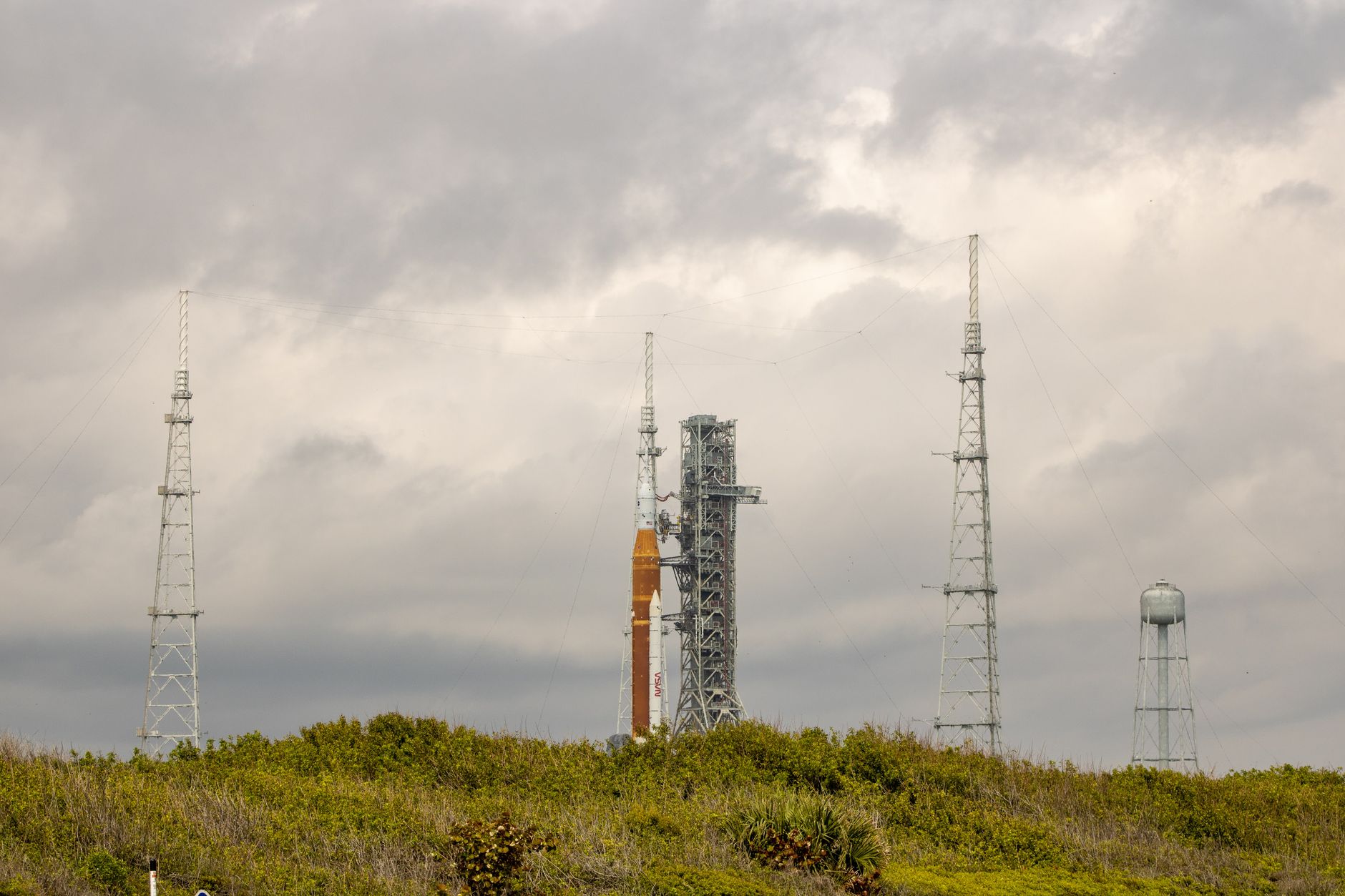
Artemis III boosters are now fully stacked, marking a significant milestone for NASA as they prepare for a 2027 Earth-orbit lander test. This test is crucial for the upcoming Moon landing.
What is the Artemis III mission?
The Artemis III mission is a pivotal step in NASA’s efforts to return humans to the Moon, aiming for a landing in 2025. This ambitious program seeks to establish a sustainable presence on the lunar surface, enabling future exploration and scientific research.
One of the key components of the Artemis III mission is the Artemis III boosters, which are designed to provide the necessary thrust for the Space Launch System (SLS) rocket. These boosters play a crucial role in launching the Orion spacecraft, which will carry astronauts to the Moon.
The mission will also involve the Lunar Gateway, a space station that will orbit the Moon and serve as a staging point for lunar landings. Artemis III aims to land the first woman and the next man on the Moon, marking a significant milestone in space exploration.
With robust engineering and innovative technology, Artemis III is set to pave the way for future missions that could unlock the mysteries of our nearest celestial neighbor.
Significance of the Earth-orbit test
The Earth-orbit test for the Artemis III boosters is a crucial milestone in NASA’s preparations for a return to the Moon. This test aims to evaluate the performance of the boosters in a controlled environment before they are used in the actual mission. Successful testing ensures that the boosters can deliver the necessary thrust and stability during launch, which is essential for a safe landing on the lunar surface.
Key aspects of the Earth-orbit test include:
- Verification of design: The test will confirm that the boosters meet all engineering specifications.
- Data collection: Engineers will gather data on the boosters’ performance, informing future adjustments.
- Risk assessment: Identifying any potential issues early on helps mitigate risks associated with the mission.
Ultimately, the results of the Earth-orbit test will play a significant role in determining whether the Artemis III boosters are the best way to land on the Moon, paving the way for future lunar exploration.
How are the boosters stacked?
The Artemis III boosters are assembled using a meticulous process that ensures safety and efficiency for the upcoming lunar mission. Stacking these boosters involves several critical steps, each designed to optimize performance and reliability.
- Preparation of Components: Each booster is carefully inspected and prepared before the stacking process. This includes testing for structural integrity and functionality.
- Vertical Stacking: The boosters are stacked vertically in a specialized facility, allowing engineers to monitor alignment and weight distribution.
- Integration of Systems: Once stacked, various systems are integrated, including electrical and propulsion components, ensuring they work harmoniously during launch.
- Final Checks: Comprehensive checks are performed to confirm that all systems are operational and that the Artemis III boosters are ready for their role in the mission.
This precise stacking process is crucial for the success of the Artemis III mission, paving the way for humanity’s return to the Moon and beyond.
Timeline for the next Moon landing
The timeline for the next Moon landing is crucial as NASA prepares for the Artemis III mission. With the Artemis III boosters now stacked, the agency aims to conduct an Earth-orbit test in 2027. This test will be a significant milestone in ensuring the mission’s success, providing valuable data on the performance of the boosters and their ability to support lunar landings.
Key dates leading up to the Moon landing include:
- 2024: Final testing of the Artemis III boosters to confirm safety and efficiency.
- 2025: Launch of the Artemis II mission, which will carry astronauts around the Moon.
- 2026: Preparations for the lunar lander design and integration with the Artemis III boosters.
- 2027: Earth-orbit test of the boosters, paving the way for the eventual Moon landing.
These milestones will determine if the Artemis III boosters are indeed the best way to land on the Moon, ensuring a successful return to lunar exploration.
Challenges faced by NASA
The Artemis III mission, aimed at returning humans to the Moon, is facing several challenges that could impact its success. One of the primary issues is the complexity of the Artemis III boosters, which are crucial for providing the necessary thrust during launch.
Another challenge is ensuring the reliability of the technology involved. NASA must guarantee that all components function flawlessly during both ground tests and the actual mission.
Additionally, the integration of various systems poses logistical hurdles. The coordination between the Artemis III boosters and other spacecraft components requires meticulous planning and execution.
Funding constraints further complicate the situation, as budget allocations fluctuate and can delay critical developments. As a result, meeting the ambitious timeline for the next Moon landing may be at risk.
Despite these obstacles, NASA remains committed to overcoming them and advancing the Artemis program, with the Artemis III boosters playing a pivotal role in achieving their lunar objectives.
Public interest in space exploration
Public interest in space exploration has surged in recent years, fueled by ambitious missions and technological advancements. The Artemis III boosters, designed to support NASA’s return to the Moon, play a pivotal role in this renewed excitement.
Many individuals are captivated by the prospect of human landings on the lunar surface, which evokes a sense of adventure and curiosity reminiscent of the Apollo missions. This interest is not just limited to seasoned space enthusiasts; it has permeated mainstream culture, inspiring younger generations to look to the stars.
The Artemis program, particularly with its focus on the Artemis III boosters, has sparked discussions about the future of lunar exploration and potential colonization. People are eager to learn about the engineering feats involved and the scientific discoveries that await. As NASA prepares for the Earth-orbit test of the Artemis III boosters, the public’s enthusiasm for space exploration continues to grow, highlighting a collective desire to push the boundaries of human achievement.
Future implications for lunar missions
The implications of the Artemis III boosters extend beyond just the upcoming lunar landing. As NASA prepares for its 2027 Earth-orbit test, the success of these boosters could redefine how future lunar missions are conducted. With advancements in propulsion technology and design, the Artemis III boosters might pave the way for more efficient and robust space travel.
Experts believe that if the Artemis III boosters prove effective, they could serve as a model for subsequent lunar missions, potentially reducing costs and increasing payload capacities. This could enhance both crewed and uncrewed missions, allowing for more comprehensive exploration of the Moon’s surface.
Additionally, the lessons learned from the Artemis III boosters could influence the development of technology for missions to Mars and beyond. As NASA focuses on sustainable exploration, the data gathered from these boosters will be invaluable in shaping future spacecraft and their capabilities.
Overall, the outcomes of the Artemis III boosters will play a crucial role in the trajectory of lunar exploration and the broader ambitions of space travel.
Photo by Daniel Dzejak on Pexels
Sources
Data-sharing prepaid family plan: Smart and Simple Choice · iOS 27.1 Update: Best Proven Features You’ll Love · AI Listening Devices: Best Smart Solutions for You